Proactive, Law Compliant Planning Can Significantly Reduce Tax Burden
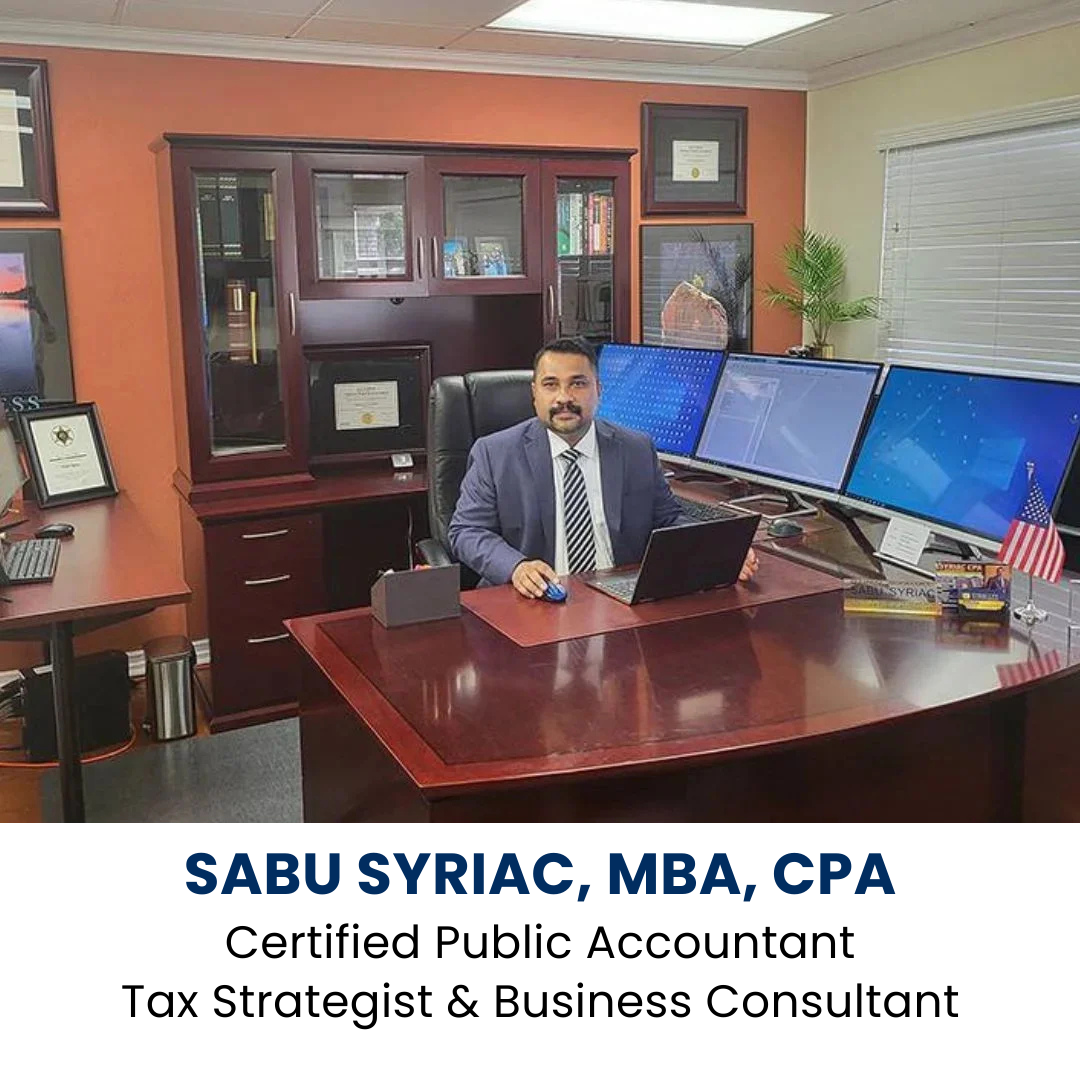
By Sabu Syriac, MBA, CPA
Certified Public Accountant
Tax Strategist and Business Consultant
President and CEO
Syriac CPA Tax and Accounting Services Inc.
A Professional Corporation
Member – AICPA
Member – California State Board of Accountancy
For many business owners and high income professionals, taxes represent one of the largest recurring financial expenses. Despite strong earnings and careful financial management, a surprising number of taxpayers legally pay more taxes than necessary. The reason is not negligence or calculation errors. In most cases, it is the absence of structured and proactive tax planning.
Tax filing alone does not guarantee tax efficiency.
Most individuals and businesses focus on taxes only when deadlines approach. Documents are gathered, numbers are reviewed, and returns are prepared based on transactions that have already occurred. While accurate filing is essential for compliance, it is largely retrospective. By the time the return is completed, the financial year has ended and opportunities to significantly influence the outcome are limited.
Meaningful tax savings are created during the year, not at the last minute.
Proactive tax planning is a strategic process that evaluates income, expenses, investments, and financial decisions before the year closes. It allows taxpayers to legally minimize tax liabilities by making timely adjustments that align with federal and state tax regulations. Without planning, decisions are made in isolation. With planning, financial actions are coordinated for optimal tax efficiency.
Many taxpayers do not overpay because of mistakes. They overpay because opportunities were never explored.
Business owners frequently make decisions involving compensation, equipment purchases, expansion, retirement contributions, and expense management. Each of these carries tax consequences. When planning is not integrated into decision making, deductions may be underutilized, expenses may not be structured efficiently, and income recognition may occur at unfavorable times.
High income professionals face similar challenges.
Physicians, dentists, consultants, executives, and other professionals often manage multiple income sources, including wages, practice earnings, consulting fees, partnership distributions, and investment income. Without coordinated planning, these income streams may be taxed inefficiently, resulting in higher liabilities and reduced cash flow.
Law compliant tax planning provides a clear and legal solution.
Effective tax strategies may include evaluating the appropriate business entity, structuring reasonable compensation arrangements, optimizing business expense treatment, coordinating retirement contributions, managing the timing of income and deductions, applying depreciation rules, and aligning investment decisions with tax efficiency.
Every strategy must be tailored to the taxpayer’s specific financial profile.
A common misconception is that tax reduction strategies involve aggressive interpretations or questionable practices. Ethical tax planning is grounded in careful analysis, proper documentation, and responsible application of tax law. The objective is compliance, accuracy, and efficiency.
The goal is to pay the correct tax, not more than required.
When implemented correctly, proactive tax planning can deliver substantial benefits. Businesses often experience reduced tax liabilities, improved liquidity, better cash flow management, and greater financial predictability. Professionals gain clarity, stability, and fewer surprises at filing time. Instead of reacting to large balances due, taxpayers operate with a strategy.
Another important factor is economic value.
Many taxpayers hesitate to invest in year round tax advisory services, viewing them as discretionary expenses. In practice, structured tax planning frequently generates savings that exceed advisory fees many times over. More importantly, planning reduces uncertainty, prevents costly surprises, and strengthens compliance positions.
In today’s evolving tax environment, passive tax management is no longer sufficient.
Tax laws change. Income structures become more complex. Financial decisions carry greater consequences. A once a year filing approach cannot consistently produce optimal outcomes. Year round tax planning has become an essential component of intelligent financial management.
At Syriac CPA Tax and Accounting Services Inc., our philosophy is straightforward. Taxes should be planned, not merely reported. Our focus extends beyond accurate tax preparation to designing smart, law compliant tax strategies aligned with each client’s financial and business objectives.
Because the objective is not simply filing returns.
It is legally minimizing taxes, protecting cash flow, and building stronger financial outcomes.